The Art of Refreshed Eyes
Eyelid Surgery
Dr. Jonathan Zelken, MD · Board-Certified · Newport Beach, CA
Board-certified plastic surgeon Dr. Jonathan Zelken refines the upper and lower eyelids with meticulous, laser-assisted technique — for instant, natural results that leave you looking rested, never altered.
Approach
Dr. Zelken's Philosophy
For Dr. Zelken, blepharoplasty is one of his three favorite operations — precisely because it rewards perfectionism. The eyes are the first thing people notice, and small, meticulous refinements around them create an outsized effect: rested, brighter, more approachable.
His guiding principle is that eyelid surgery should preserve your appearance, not rewrite it. Rather than simply excising tissue, Dr. Zelken believes the true goal is eliminating the shadows and folds that make you look tired — often by repositioning fat to soften hollows and restore a natural cushion.
The result is refreshed, never "done." Optimal outcomes should leave friends wondering whether you had something done at all — and reflect the same artistry and subtlety Dr. Zelken has studied firsthand in Newport Beach and abroad.
The Procedure
What is Eyelid Surgery?
Eyelid surgery — also called blepharoplasty, or simply an eyelid lift — reshapes the upper eyelids, the lower eyelids, or both, along with the surrounding area. It's one of the most versatile facial procedures, addressing fine lines and wrinkles, sagging upper lids, under-eye bags, excess skin, and pockets of fat that build up over time.
Because the changes around the eyes seem to appear almost overnight, the results of surgery can feel just as immediate. Beyond appearance, an upper eyelid lift can also improve vision when heavy, sagging skin begins to obstruct the upper field of view.
Procedures range from straightforward to complex. Many are performed right in the office suite under local anesthesia with oral sedation, while twilight sedation with a board-certified anesthesiologist is also available. In the video below, Dr. Zelken demonstrates his laser-assisted approach to upper and lower eyelid rejuvenation.
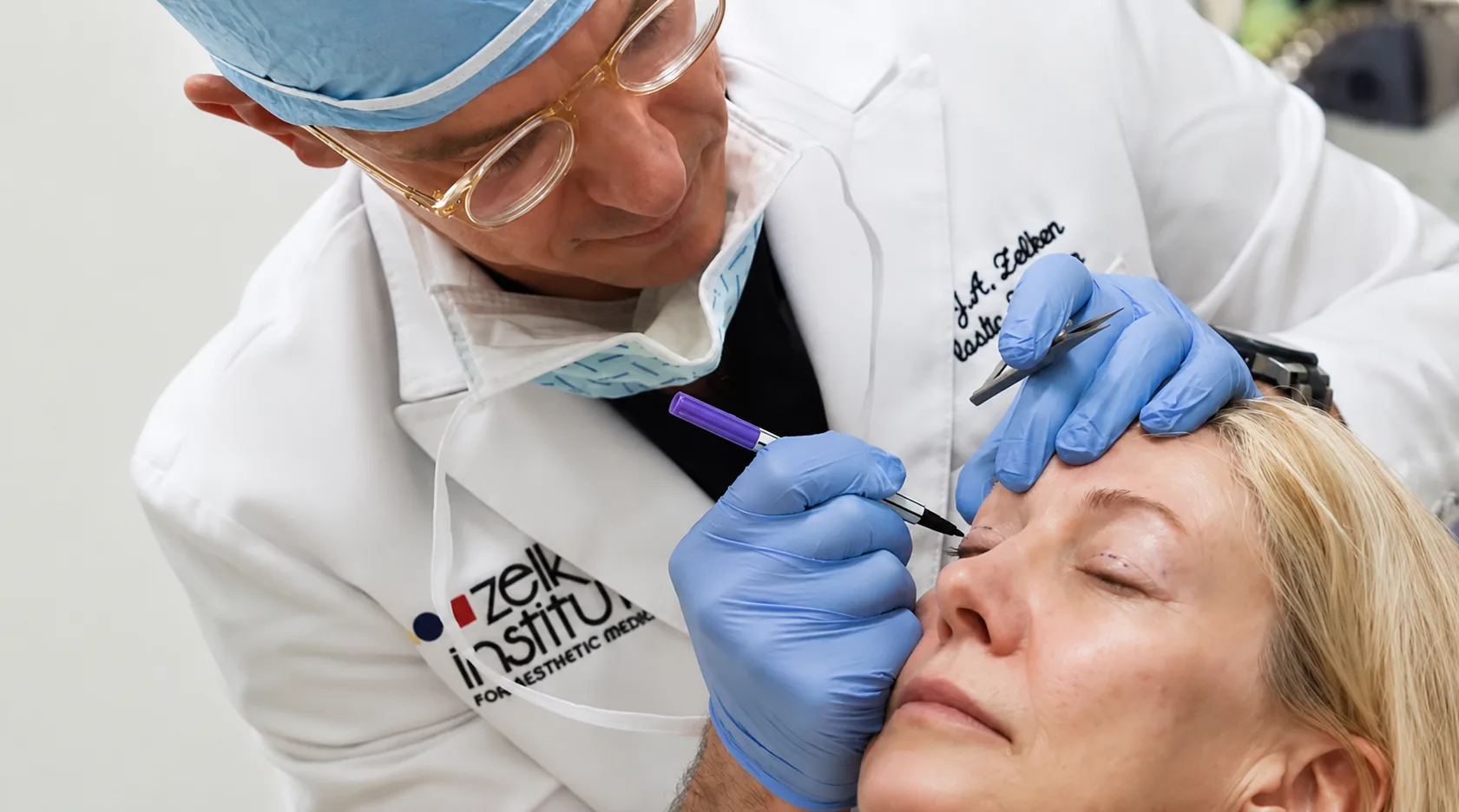
Laser Blepharoplasty — Upper & Lower Eyelid Rejuvenation with Dr. Jonathan Zelken, MD
Tailored to You
Types of Eyelid Surgery
Dr. Zelken approaches every set of eyes individually, choosing the technique — or combination — that best fits your anatomy and goals.
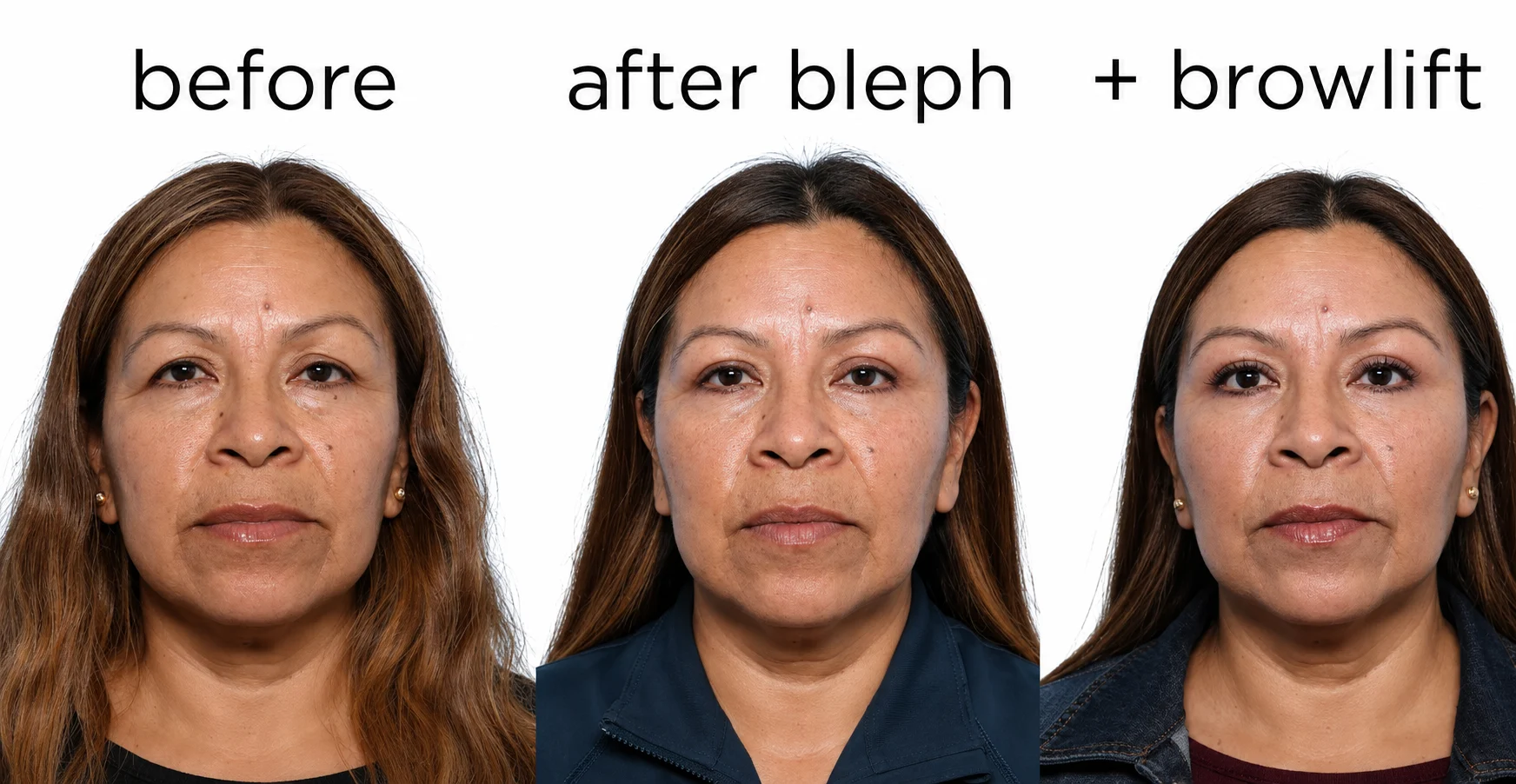
- Upper Eyelid Blepharoplasty Removes excess skin and fat from the upper lids to open and brighten tired-looking eyes.
- Lower Eyelid Blepharoplasty Softens under-eye bags and shadows, often by repositioning fat rather than simply removing it.
- Asian & Ethnic Blepharoplasty Opens and defines the eyes while carefully preserving your natural ethnic identity.
- Laser Blepharoplasty Dr. Zelken's Lumenis AcuPulse laser allows precise, refined work with minimal bruising.
- Fat Repositioning Excess fat is repositioned to efface folds and restore a soft, youthful cushion.
- Combined Brow Lift A single-stitch brow lift can be paired with eyelid surgery to lift heavy lids.
Benefits of Eyelid Surgery
Brightens and opens tired, heavy-looking eyes.
Smooths fine lines and wrinkles around the eyes.
Reduces under-eye bags and puffiness.
Removes excess, sagging skin from the upper lids.
May improve vision when sagging skin blocks it.
Delivers instant, natural, long-lasting refreshment.
Is It Right For You
Who is a Good Candidate?
Good candidates for eyelid surgery are men and women in good general health who feel their eyes no longer match how they feel — whether that's heaviness in the upper lids, persistent under-eye bags, or a tired, shadowed look that lingers even when well rested.
Because blepharoplasty is often performed under local anesthesia, it can suit a wide range of patients, including those who prefer to avoid general anesthesia. If sagging upper-eyelid skin has begun to interfere with your vision, you may be an especially strong candidate — and a portion of your procedure may even qualify for insurance coverage.
The best way to know is a personalized evaluation. During your consultation, Dr. Zelken will assess your eyelids, discuss your goals, and recommend whether an upper, lower, or combined approach is right for you.
What to Expect
The Eyelid Surgery Procedure
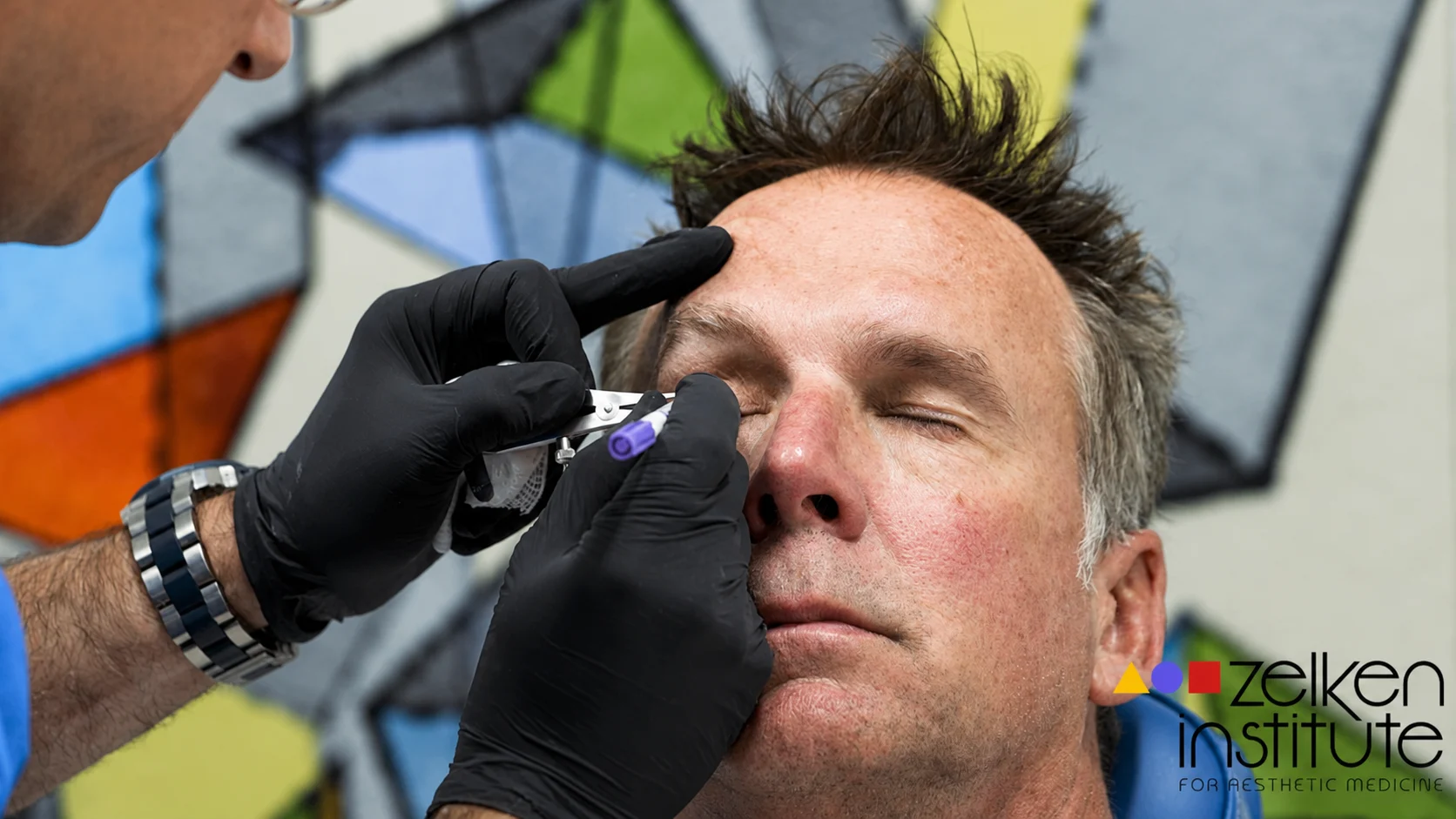
Dr. Zelken places incisions where scars stay hidden — in the natural creases of the upper lids and just beneath the lashes or inside the lower lids. Using an advanced laser, he removes or repositions excess skin, fat, and muscle, then refines the underlying tissues. Whenever possible, fat is repositioned to rebuild a soft, natural cushion rather than simply removed.
Healing Timeline
Recovery
First Week
- A prescription ointment eases inflammation and speeds healing. Sutures are typically removed at about one week, with detailed instructions provided before you leave.
Two Weeks
- Most patients are socially presentable by about two weeks, at the very least with a little cover-up over any residual bruising.
Minimizing Bruising
- Stopping aspirin and alcohol before surgery, as directed, helps many patients avoid significant bruising and recover more comfortably.
Long-Term
- Final results settle over the following weeks, revealing brighter, rested eyes — and, for many, a rejuvenation that lasts for years.
The Outcome
Results & Longevity
The reward of eyelid surgery is how quickly and naturally it refreshes the face. Because the eyes anchor so much of how we read expression, even subtle changes register as looking rested, brighter, and more approachable — without looking altered.
Dr. Zelken's aim is never to change who you are, but to restore what fatigue and time have obscured. Shadows soften, heaviness lifts, and the eyes look open and awake again. Done well, the outcome is quietly transformative: friends notice that you look great, without ever suspecting surgery.
For many patients the results are long-lasting, complemented over time by good skincare, sun protection, and the occasional nonsurgical touch-up when desired.
Transparency
Risks & Considerations
As with any surgery, eyelid procedures carry some risks — including swelling, bruising, temporary dryness or irritation, and, rarely, changes in eyelid position. Dr. Zelken believes in complete transparency and reviews every consideration with you during your consultation. Detailed pre- and post-operative instructions help minimize risks and support a smooth, comfortable recovery.
Explore More
Related Procedures
Begin Your Journey
Ready to Refresh Your Eyes?
If you're considering eyelid surgery, contact us today to schedule a consultation with Dr. Jonathan Zelken and discover the refreshed, natural results you're looking for.
Common Questions
Eyelid Surgery FAQ
Answers to the questions patients most often ask about eyelid surgery.
Yes. Blepharoplasty is often paired with a brow lift, facelift, or injectables like fillers and Botox to enhance and freshen your overall result.
Sometimes. If sagging upper-eyelid skin obstructs your vision, part of your surgery may be covered. We'll help you explore whether you qualify.
Absolutely. Ethnic and Asian blepharoplasty opens and refines the eyes while carefully preserving your natural, individual features and identity.
Many patients do well with local anesthesia and oral sedation. Twilight sedation with a board-certified anesthesiologist is also available in the office.
Incisions are placed in natural creases and hidden areas, so healed scars are very difficult to see.
Most patients are socially presentable around two weeks, often sooner with a little cover-up over any residual bruising.
Sutures typically come out about one week after surgery, and you'll receive detailed self-care instructions before you leave.
The goal is a natural refresh. Optimal results leave friends wondering whether you had something done — without ever being sure.