
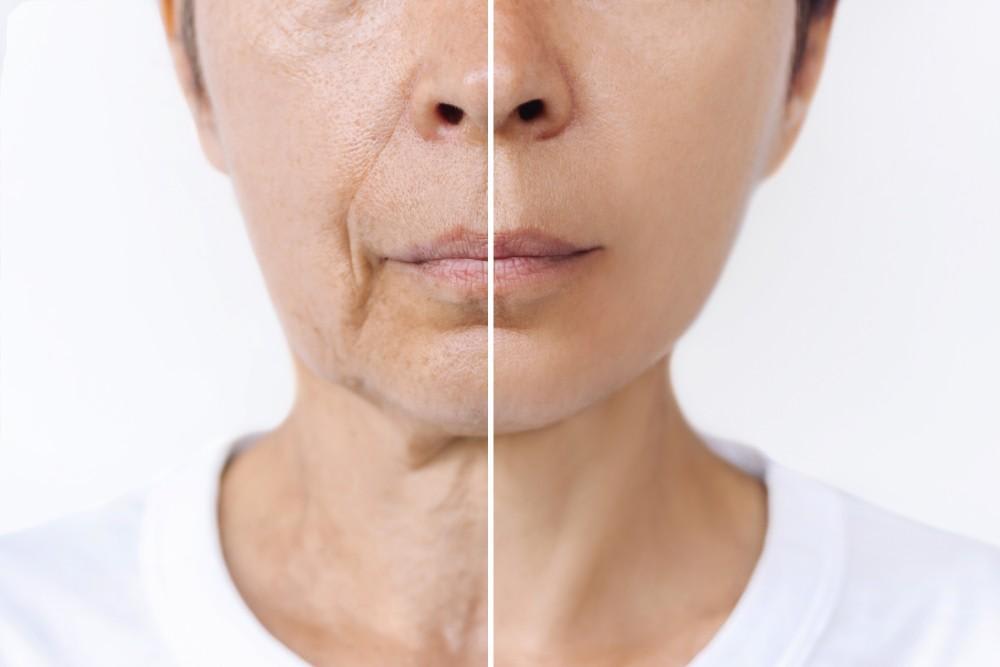
To address aging cosmetically, the facelift still reigns supreme and has for decades. That said, the facelift of many decades ago is not the same facelift we offer today.
Thanks to a better understanding of aging skin, anatomy, and how these procedures perform in the short- and long-term, we’ve come a long way in the world of facelifts.
Tracking this facelift evolution closely is our own board-certified plastic surgeon, Dr. Jonathan Zelken, who helps people to achieve their cosmetic goals here in Newport Beach and Orange County, California. Over the years, Dr. Zelken has studied the science and history of facelifts, and he’s found that deep plane facelifts excel in many key areas.
So, if you’re curious about today’s facelift and all that we can accomplish, read on to learn why a deep plane facelift is making such a big splash.
The challenges with traditional facelifts
Believe it or not, the first facelift was performed in 1901, but it wasn’t until the 1960s that the facelift hit its stride and became more popular. Today, about 80,000 facelifts are performed each year in the United States.
Historically, facelifts were performed as mostly skin-only procedures. What this means is that surgeons simply took aging and sagging skin, pulled it taut, trimmed the excess, and sutured the ends together. As you might imagine, this technique was very hard on aging skin.
A great way to think of this is like a favorite shirt. You wear this shirt a lot, and it has worn down over time, maybe even to the point where you don’t even want to put it in the washing machine for fear of damage.
This threadbare shirt is a great analogy for your skin. Over time, it loses elasticity and tone due to a drop in collagen and elastin. And these deficits leave your skin increasingly weaker and more fragile.
So, like washing your favorite shirt in the washing machine, stretching, pulling, cutting, and stitching this skin isn’t a great idea and can lead to more damage.
Going the distance with a deep place facelift
With a deep plane facelift, Dr. Zelken can preserve the integrity of your skin while delivering incredible results that really go the distance.
Instead of the skin-only approach, Dr. Zelken prefers the deep plane approach because he can go beneath your skin to achieve real change. Just below your skin is the superficial muscular aponeurotic system (SMAS), the framework layer that holds the muscles, fat, and skin of your face together.
To perform a deep plane facelift, Dr. Zelken first isolates the SMAS by severing the tiny ligaments that hold it in place. Once your SMAS is free, Dr. Zelken can reposition and resuspend it to create a more youthful foundation.
As he works with your SMAS, Dr. Zelken can make other important foundational tweaks, such as removing or repositioning buccal or malar fat pads in your cheeks or smoothing out tissues under your eyes to create a more youthful appearance.
Once Dr. Zelken is satisfied that the foundational work meets all of your specific goals, he then gently pulls your skin over the newly positioned SMAS. From there, he sutures it in place using an innovative, low-tension technique that won’t damage your aging skin.
Ultimately, a deep plane facelift offers more natural, sustainable results than traditional facelifts, as Dr. Zelken addresses both the deeper and superficial layers for better harmony and durability.
What a deep plane facelift can accomplish
With our deep plane facelift, Dr. Zelken can check a lot of anti-aging boxes, such as:
- Tightening loose jowls
- Smoothing out lines and wrinkles around your mouth and eyes
- Tightening the under-eye areas
- Reshaping hollowed out cheeks
This list is far from complete, and we invite you to visit our Newport Beach office for a consultation to learn how Dr. Zelken can tailor a deep plane facelift to your needs. In the meantime, you can check out some great videos that explain Dr. Zelken’s work in more detail here.
To set up a consultation, please call our Orange County, California-based practice at (949) 676-9119. Or, you can request an appointment using our online booking tool.